Opinion
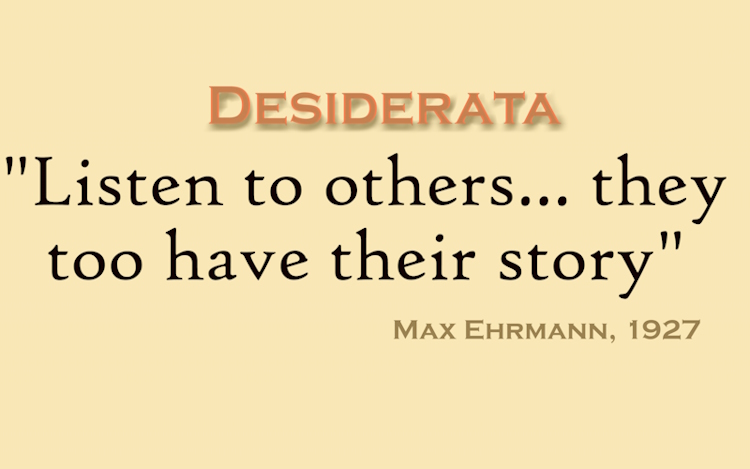
Listening to other people’s stories
Ian Boughton was at a funeral for an old friend recently, and came to realise how little he really knew about him.
At my age, most social occasions these days seem to be centred around the passing of friends. This funeral was for a chap I had played music with in several bands. I recalled that our last gig together had been at a church gospel show, and I now realise that it may have been my friend’s last public concert.
At his funeral service, conducted with style, sensitivity, and humour by a chaplain from the N&N hospital, I was fascinated by the tributes from my friend’s family, from which I learned a remarkable number of very creditable things, none of which I had suspected from several years of playing music beside him.
Indeed, several of us who had played together were seated in the back row, growing ever more intrigued at the tributes. To us, he had been a thoroughly nice guy, who never pushed himself forward, a friend we played gigs with and went out on family lunches together… but, even though being in a band together does give you a close relationship with someone, we knew relatively little more.
And here we now were, listening to his younger relatives saying how our friend had been such a major influence and positive role model in their early lives; we looked at each other and nodded approvingly. Then they spoke of how he truly loved ballet, having come to appreciate it in his old age – a couple of us looked at each other and mouthed 'what?' Our old mate had clearly had hidden depths.
When we then learned he was a linguist who loved languages so much, he translated children’s stories into Latin, we simply looked at each other open-mouthed.
Why did I not know this? Why did we not speak about such things while he was alive? This is a familiar sensation I have had many times, often regarding my parents – there was so much I should have talked with them about while I had the chance. But I didn’t. I never do. I’m too bound up in my own story to appreciate the story of other lives.
However... even if all the world really was a stage and we are all just players on it, it does not follow that I am the star of my own show, and that everyone else is just a ‘bit part’. Other people are not just ‘extras’ in the script of my life, even if I often treat them as if they are.
By what may or may not have been coincidence, a Bible reading plan has today pointed me to James 1:19, which points to my failing in a direct and relevant way when James says ‘be quick to listen’. One minister has interpreted this to mean that listening shows humility and respect for others.
This in turn brings to mind some powerful words from the Desiderata: "listen to others - they too have their story". Ah, wise words indeed. I think it may do me a lot of good if I spend a sight more time listening to people and taking more of an interest in their stories.
I wish I had done so with my old friend.
(The Desiderata is the inspirational prose poem that begins “Go placidly amid the noise and haste…” and which became a famous and fashionable poster to be found on living-room walls in the 1960's. A popular belief of the time was that the words were an ancient philosophy, discovered on an old church wall, dating from 1692. This fanciful story was probably created by a printer, as a helpful marketing device to sell copies… the words were actually written by Max Ehrmann in the 1920s!)
The image is courtesy of Ian Boughton.
 Ian Boughton is a musician and author and retired journalist who lives in Dilham in Norfolk.
The views carried here are those of the author, not of Network Norfolk, and are intended to stimulate constructive and good-natured debate between website users.
We welcome your thoughts and comments, posted below, upon the ideas expressed here.
Click here to read our forum and comment posting guidelines