Opinion column
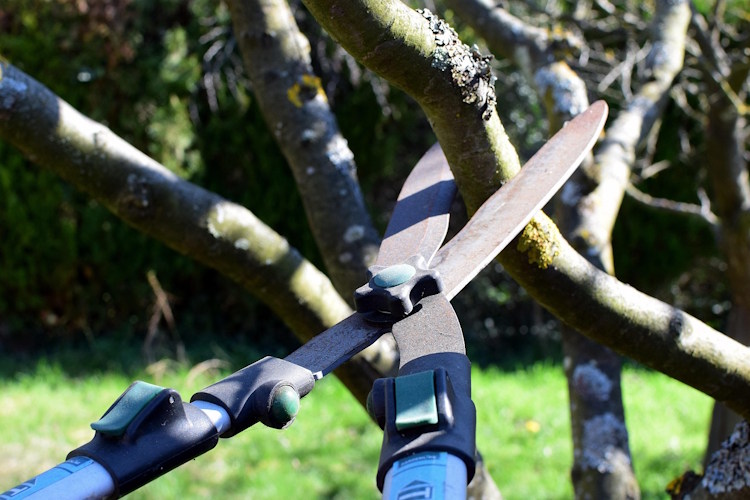
When a painful pruning is for the greater good
James Knight explains how God’s pruning, which may be painful, can result in a more fulfilling life.
You’ve probably noticed that sometimes it needs a situation to get really bad before it gets better than it was before, when it was merely ok or slightly difficult.
For example, I know a brother and sister who had a strained relationship for a number of years, and then they had a big fall-out, where they descended into a relationship crisis. This forced them to confront some deeper issues – after which there was profound healing and restoration, and now their relationship is better than it has ever been. Moreover, in the case of these siblings, I sense that each individual is now the best version of themselves they’ve ever been.
Perhaps the most famous template for this is how the Prodigal Son (Luke 15) only comes to his senses once his situation is utterly intolerable. If the son had been merely dissatisfied or mildly unhappy, he might never have returned to his father’s love (which is, of course, representative of God’s love for each of us). Often, it is only when the pit grows wide and deep enough that there is finally room for the light to reach us.
There’s a fairly well-known phenomenon in the social sciences called The Region-Beta Paradox, coined by psychologist Daniel Gilbert, which says that because we often endure things that are bad but just about tolerable, this stops us from excelling into truly transformative situations. The paradox is that when situations are quite bad, we'd actually be better off in the long term if they got worse, because then we'd take more radical action to make things much better.
The obvious examples are things like staying in an unsatisfying job role, or remaining in a sub-optimal unmarried relationship, or living with a persistent toothache rather than having it out - situations that feel not intolerable enough to leave or act, but actually aren’t good enough for us to justifiably remain in that state. In other words, there are conditions where it’s ultimately better for us in the medium and long term to suffer from deeper hardship or struggle, to come out better, stronger, and hopefully, eventually transformed.
To live a full life as a Christian, it is important to discern when we might be in a Region-Beta situation, and take steps to move into something better. That will inevitably involve stepping out of some comfort zones – but there is nowhere in scripture that endorses comfort zones as viable medium to long term goals.
I love how the writer of Hebrews puts it: “No discipline seems pleasant at the time, but painful. Later on, however, it produces a harvest of righteousness and peace for those who have been trained by it.” Hebrews 12:11.
And even more powerful words from our Lord himself, when he says: “I am the true vine, and my Father is the gardener. He cuts off every branch in me that bears no fruit, while every branch that does bear fruit He prunes so that it will be even more fruitful.”
As Christians who have hopefully undergone lots of pruning, and who are hopefully always praying for more, pruning tends to be purposeful, short-term pain that prevents stagnation at what we might deem satisfactory, with God pushing us further into even better than we think we want or need. God does not allow comfortable plateauing where greater flourishing is possible, and where there is a will to be transformed.
Perhaps, then, the question is not simply whether our lives are comfortable or even stable, but whether we are truly alive. If we find ourselves merely coping rather than growing, merely enduring rather than being transformed, it may be that God is inviting us not to settle for what is tolerable, but to trust Him enough to step into something far better.
The great spiritual danger is not suffering that breaks us open, but comfort that keeps us in stasis. If we are not careful, what we tolerate for too long can quietly become the very thing that keeps us from the full life God is offering.
Image by Christian Riedl from Pixabay.
 James Knight is a regular columnist for Christian community websites Network Norfolk and Network Ipswich. He also blogs regularly as The Philosophical Muser, including his Philosophical Muser You Tube channel, and contributes articles to UK think tanks The Adam Smith Institute and The Institute of Economic Affairs, as well as the London Institute for Contemporary Christianity (LICC).
The views carried here are those of the author, not necessarily those of Network Norfolk, and are intended to stimulate constructive debate between website users.
We welcome your thoughts and comments, posted below, upon the ideas expressed here.
Click here to read our forum and comment posting guidelines
You can also contact the author direct at j.knight423@btinternet.com