Opinion
We should be caretakers to God’s planet
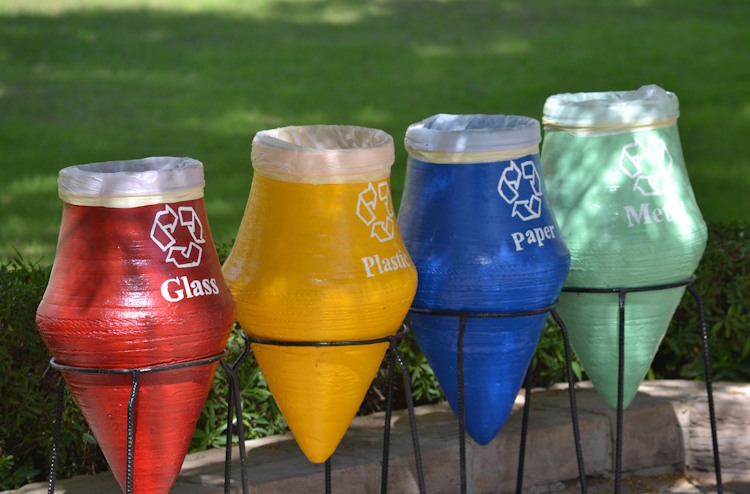
Hannah Hammond has been putting out her bins, and reminds us that avoiding unnecessary waste helps us to play our part in caring for God’s creation.
I don’t think many of us wake up intending to harm the planet. And yet, almost without noticing, we live alongside troubling headlines: forests burning, communities displaced, land and seas overwhelmed by waste. Somewhere between putting out the bins and scrolling the news, I’ve found myself asking what any of this has to do with faith — and whether small, everyday choices really matter.
The Bible tells us that humanity was given “dominion” over creation. It has been easy to hear that word as permission, but the longer I sit with Scripture, the more I hear it as responsibility. “The earth is the Lord’s, and everything in it” (Psalm 24:1). That includes the things we use briefly and discard easily. We are not owners, but caretakers.
Our culture makes it easy to treat things as disposable. We replace rather than repair, upgrade rather than wait, and throw away, not because something is broken, but because something newer exists. Over time, that mindset shapes us — and it shapes the world we live in. Recycling can feel insignificant against such a backdrop, and it’s all too easy to dismiss it as too small to matter. But stewardship is usually quiet, repetitive, and unseen.
The Christian story begins with creation — lovingly spoken into being and declared “good.” Scripture shows us a God who not only creates, but sustains, holding all things together. Creation matters because God loves it. And in Jesus, God enters fully into the physical world, affirming its worth rather than abandoning it.
That has changed how I think about environmental choices. Waste does not disappear when it leaves my home; it ends up somewhere — often affecting people who already carry the greatest burdens. Loving our neighbour includes caring about the air they breathe, the land they live on, and the future their children will inherit.
There is a small moment in the Gospels that stays with me. After feeding the five thousand, Jesus tells his disciples to gather the leftovers so that nothing is wasted. Even in abundance, care matters. Nothing is treated as disposable — not food, not people, not creation itself.
The Christian hope is not that the earth will be thrown away and replaced, but that it will be renewed. Paul writes that creation waits in eager expectation to be freed from decay (Romans 8:18–21). God’s work is restorative, not destructive — and somehow, we are invited to take part in it.
Recycling will not change the world overnight. But it is changing me. It slows me down. It reminds me that what I use is not mine to waste. It becomes a small, faithful way of aligning daily habits with a God who creates, loves, and restores.
And perhaps that is where faith so often begins — not with grand gestures, but with small acts of care, offered faithfully, day after day.
Image by imordaf from Pixabay.
 Hannah Hammond is a theology graduate with a passion for writing and anything creative. She currently works for St Mary Magdalen Church in Gorleston but is about to join East Coast College as a success coach. See rootedtheology.com
The views carried here are those of the author, not of Network Norwich and Norfolk, and are intended to stimulate constructive debate between website users.
We welcome your thoughts and comments, posted below, upon the ideas expressed here.
Click here to read our forum and comment posting guidelines